

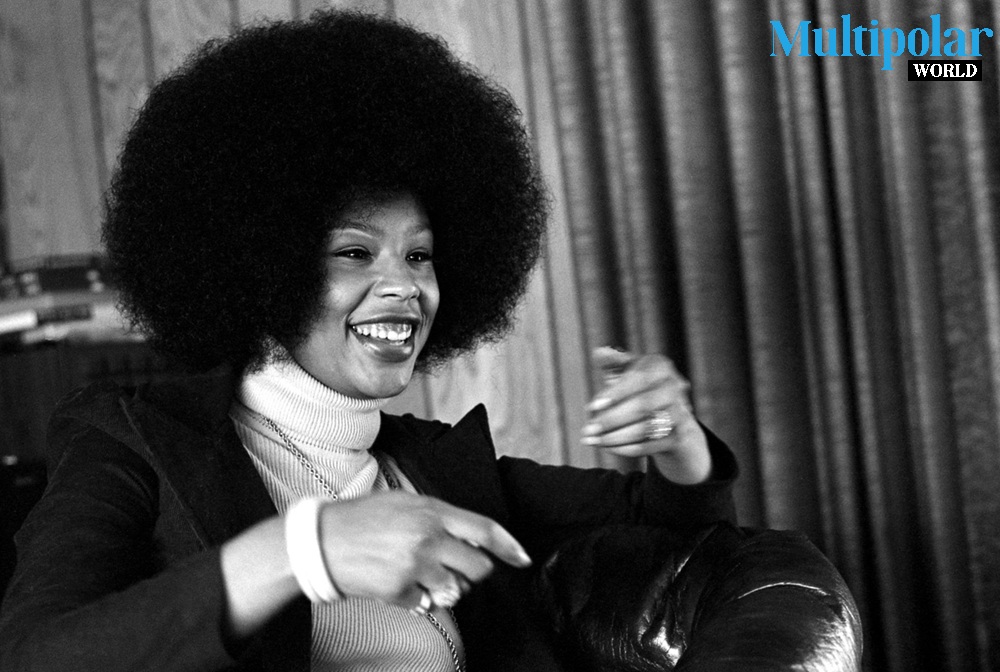
On June 17, 1994, Marguerite Whitley — who had been divorced from Orenthal James Simpson for fifteen years, who had raised their two surviving children largely alone on the modest settlement he had refused to pay without a court order, who had remarried twice and rebuilt her life in the quiet way that people who leave famous marriages tend to build their post-famous lives — watched the same television broadcast that approximately ninety-five million other Americans watched that evening: the white Ford Bronco moving slowly along the Los Angeles freeway, followed by a convoy of police vehicles, carrying a man she had known since they were teenagers in San Francisco and had married at eighteen years old.
| Quick Facts | Details |
|---|---|
| Full Name | Marguerite L. Whitley |
| Date of Birth | March 20, 1949 |
| Birthplace | San Francisco, California, USA |
| Age (2026) | 77 years old |
| Zodiac | Pisces |
| Ethnicity | African-American |
| Height | 5 ft 5 in (165 cm) |
| Education | University of Southern California (USC) |
| High School | Galileo High School, San Francisco |
| First Husband | OJ Simpson — married June 24, 1967; divorced 1979; 12 years together |
| Children (OJ) | Arnelle Simpson (b. December 4, 1968); Jason Lamar Simpson (b. April 21, 1970); Aaren Simpson (b. September 24, 1977; drowned August 1979) |
| Divorce Settlement | $26,000 lump sum + $1,500/month child support — OJ refused to pay; Marguerite sued and won (1981) |
| 1995 Interview | 20/20 with Barbara Walters — only major public appearance |
| OJ Trial (1995) | Sat in court with Arnelle and Jason; gave no interviews |
| Second Husband | Rudolph Lewis — transit supervisor; married July 9, 1986; divorced April 3, 1991 |
| Third Husband | Anthony Thomas — furniture salesman; married April 3, 1992 |
| OJ’s Death | April 10, 2024 — age 76; prostate cancer; no public statement from Marguerite |
| Current Residence | Fresno, California |
| Social Media | None |
| Net Worth (est. 2026) | $250,000 – $500,000 |
She did not give an interview. She did not call a press conference. She did not contact the television networks who would have paid significant sums for her specific perspective on the events unfolding in Los Angeles that evening. She watched. Whatever she thought, she kept to herself.
The response was completely consistent with everything Marguerite Whitley had done in the years since her divorce from OJ Simpson and the years that followed: she had chosen, with a consistency that the specific pressures of being the first wife of one of the most infamous people in American legal history could not crack, to live privately and without public comment on any of it. She had the best possible reason to speak — she had been there first, had known him longest, had lost the most to the specific way that his story ended — and she chose silence. Her life before and after OJ Simpson is the story that silence protected, and that deserves to be told on its own terms.
San Francisco and Galileo High School: Where It Started
Marguerite L. Whitley was born on March 20, 1949, in San Francisco, California — the same city that produced OJ Simpson, born July 9, 1947 in the Potrero Hill neighbourhood, and that gave both of them the specific upbringing of working-class Black San Francisco in the late 1950s and 1960s: a city that was simultaneously progressive in its politics and stratified in its economics, where the specific neighbourhoods of Hunter’s Point and Potrero Hill housed communities whose material circumstances were distinct from the city’s more celebrated districts.
She attended Galileo High School — the San Francisco public school whose alumni list includes Joe DiMaggio and Lawrence Ferlinghetti among others, and which served as the social environment in which Marguerite Whitley and OJ Simpson first encountered each other as teenagers. They were high school sweethearts — a fact that the 1995 Barbara Walters interview confirmed and that Marguerite described with the specific wistfulness of someone recalling a teenage romance before the world had decided what it would become: “We were such kids,” she told Walters. “It was fun. We didn’t have to answer to our parents anymore.”
Both went on to attend the University of Southern California — a connection that began, by multiple biographical accounts, not in San Francisco but on the USC campus itself, where an intermediary figure in their story was already present: Al Cowlings, OJ’s closest friend from childhood, who was dating Marguerite when OJ asked to drive her home from a campus event. The drive home, as the biographical accounts of that period consistently describe it, was the beginning of the romance that displaced the Cowlings relationship and set in motion the next twelve years of Marguerite’s life. Al Cowlings would remain OJ’s closest friend through everything that followed — including the Bronco chase, in which he was the driver — which places Marguerite at the origin point of one of the most consequential friendships in the story of the Simpson case.
June 24, 1967: The Wedding
Marguerite Whitley and OJ Simpson married on June 24, 1967, in San Francisco. She was eighteen years old. He was nineteen. They were, by Marguerite’s own assessment, children — young, in love, and entirely without the preparation for the specific kind of marriage that a rapidly escalating celebrity career produces in one partner while the other remains stationary.
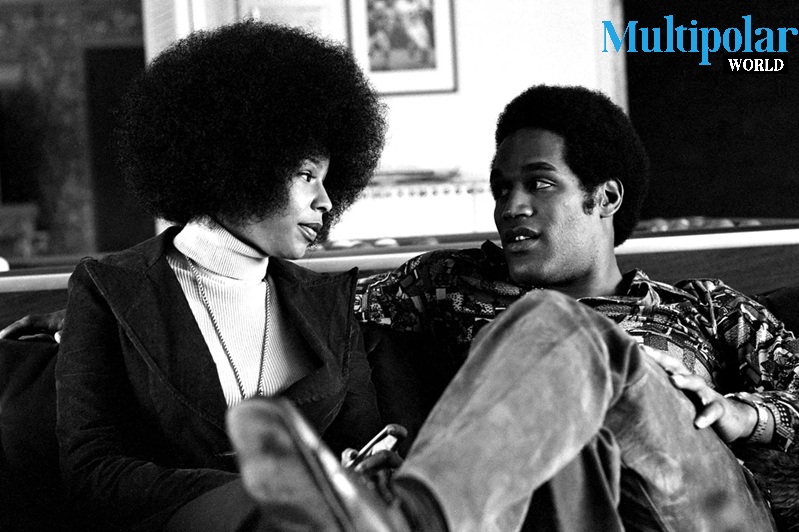
The wedding took place the year before OJ Simpson’s Heisman Trophy season at USC — the 1968 season in which he rushed for 1,709 yards, won the award with the largest margin in its history to that point, and became the most recognisable college football player in America. The marriage that began in 1967 as the union of two young people from San Francisco was, within a year, the marriage of a Heisman Trophy winner whose career trajectory pointed toward professional football, national celebrity, and all the specific disruptions that celebrity produces in the domestic arrangements of people who achieved it.
Marguerite did not have a professional career that competed with OJ’s for time or attention. She managed the household, supported his career, and occupied the specific role that the wives of professional athletes in that era were expected to occupy: present at public occasions, absent from the public record as an independent person, defined primarily in relation to the man whose career generated the family’s income and identity.
The Children: Arnelle, Jason, and Aaren
Three children were born to Marguerite Whitley and OJ Simpson across the twelve years of their marriage, and the story of those three children is the most specifically painful dimension of a biography that contains considerable pain.
Arnelle Simpson was born on December 4, 1968 — the eldest child, born the same year as OJ’s Heisman season, during the period when the professional career that would define the family’s circumstances for the next decade was just beginning to take shape. Arnelle grew up in the specific environment of a professional athlete’s household — wealthy, publicly visible, and shaped by the demands of her father’s career and schedule in ways that her mother managed largely alone. She would later stand by her father during the 1995 murder trial, sitting in the courtroom with her brother Jason through the entirety of the proceedings — the adult children of the first marriage publicly present while the circumstances of the second marriage were examined.
Jason Lamar Simpson was born on April 21, 1970 — the second child and only son, who grew up similarly shaped by his father’s celebrity and his mother’s quiet management of a household whose stability was dependent on a man who was increasingly, through the 1970s, investing his emotional and personal energy elsewhere.
Aaren Simpson was born on September 24, 1977 — the third child, born into a marriage that was already deteriorating under the specific pressures of OJ’s relationship with Nicole Brown, whom he had met in 1977 and would eventually marry in 1985 after his divorce from Marguerite. Aaren lived for less than two years. In August 1979 — just weeks before she would have turned two — she drowned in the family swimming pool. She died two days later from the injuries sustained in the drowning.
The death of Aaren Simpson is the biographical event in Marguerite Whitley’s life that exceeds everything else in its raw human weight. She was a mother who lost an infant child in circumstances that are, regardless of their specific details, the specific nightmare of every parent — the preventable accident, the momentary lapse in supervision, the irreversibility of what a few minutes of inattention can produce. She was dealing with this loss simultaneously with the collapse of her marriage, OJ’s involvement with Nicole Brown, and the practical reality of becoming a single mother to the two surviving children on a settlement that her ex-husband would subsequently refuse to honour.
“I was devastated,” Marguerite has said about Aaren’s death in the limited accounts available. The devastation is not a claim that requires elaboration or evidence. It is simply true.
The Divorce: $26,000, $1,500 a Month, and a Lawsuit
Marguerite Whitley and OJ Simpson separated in September 1978 — the separation coming in the year before Aaren’s death, a coincidence of timing that placed the end of the marriage and the loss of the child within the same twelve-month window that no biographical summary can adequately contain. The divorce was finalised in 1979 after twelve years of marriage.
The settlement that the divorce produced — $26,000 as a lump sum payment and $1,500 per month in child support — is, relative to OJ Simpson’s income at the time of the divorce, a figure of striking modesty. He was, in 1979, one of the most commercially successful athletes in America: the Hertz rental car campaigns that featured him running through airports had made him one of the most recognisable advertising faces in the country, his film and television career was generating additional income alongside his football earnings, and the financial infrastructure of a professional celebrity’s life was producing wealth at a scale that the $1,500 monthly child support payment does not begin to reflect.
OJ Simpson declined to pay the settlement. He did not honour the $1,500 monthly child support agreement. Marguerite filed a lawsuit in 1981 to enforce the terms of the divorce settlement — a legal action whose necessity speaks precisely to the gap between what the settlement specified and what OJ’s actual behaviour produced. She won the lawsuit. The legal victory confirmed what the courts had already determined; whether it produced the actual payments in full and on schedule is not documented with precision in the public record.
The lawsuit is one of the most specific and verifiable facts in the biography of Marguerite Whitley as an individual actor in her own right — a woman who, when her ex-husband refused to meet his legal obligations to the children they had made together, went to court and made him. The action required courage and determination of a specific kind: the willingness to take legal action against a man whose public image was one of universal likeability, whose lawyers were better resourced than hers, and whose celebrity status gave him a specific kind of public sympathy that a lawsuit from a first wife risks undermining in the wrong direction.
She went anyway. She won.
Life as a Single Mother: The Years Between the Marriages
The years between the divorce in 1979 and Marguerite’s second marriage in 1986 are the least documented period of her biography — the years during which she was raising Arnelle and Jason alone, managing the household on whatever the court-enforced settlement actually produced, and building an independent life in the specific circumstances of a woman whose most significant public identity was as the former wife of an increasingly famous man.
She worked. The biographical sources that document her professional life identify retail work — including a period working as a clerk at Walmart — and involvement in family business activities. These are not the career credentials of someone who was able to coast on the financial provisions of her divorce settlement; they are the working history of someone who needed to supplement whatever the settlement provided with independent income in order to give her children the material security they required.
She did not court public attention during these years. She did not write about the marriage or the divorce. She did not participate in the biographical industry that OJ Simpson’s celebrity was already generating. She raised her children, managed her finances, and lived — as she has always lived — in the private register that her consistent biographical choices reflect.
Arnelle and Jason both grew up in this environment — a household shaped by their mother’s practical resilience and their father’s physical and financial intermittency — and both remained, through the public catastrophes that would come later, the children of both parents in a way that required them to hold multiple and incompatible truths simultaneously. When OJ was on trial in 1995 for the murders of Nicole Brown Simpson and Ron Goldman, Arnelle and Jason sat in the courtroom, present for their father in the public space of the trial, navigating a situation whose emotional complexity exceeds any comfortable description.
Marguerite sat with them. She gave no interviews. She offered no commentary.
Two More Marriages: Rudolph Lewis and Anthony Thomas
On July 9, 1986 — seven years after her divorce from OJ Simpson — Marguerite Whitley married Rudolph Lewis, a transit supervisor. The marriage lasted approximately five years; it was dissolved on April 3, 1991. The specific circumstances of the marriage and its end are not documented in the public record beyond the dates, which is consistent with Marguerite’s general approach to keeping the details of her personal life outside the public record.
On April 3, 1992 — exactly one year after the dissolution of the Lewis marriage — she married Anthony Thomas, a furniture salesman. The most recent biographical sources describe this marriage as continuing — Marguerite and Anthony Thomas believed to be together as of the most recent available accounts. Whether the marriage has continued to the present is not confirmed with absolute certainty, but the absence of any record of its dissolution is the best available evidence that it has.
The pattern of the two post-OJ marriages is, in the biographical sense, the pattern of someone who was willing to try again — twice — at the kind of domestic partnership that the OJ marriage, for all its early sweetness, had failed to sustain. The choices she made in those subsequent marriages — a transit supervisor, a furniture salesman — are the choices of someone who was not selecting for celebrity or public profile but for the specific qualities of a private partner in a private life.
1995: The Barbara Walters Interview
The 1995 20/20 interview with Barbara Walters is the only major public appearance that Marguerite Whitley has given across the entirety of her post-divorce life, and it occurred in the specific context of the OJ Simpson murder trial — the event that placed every person connected to OJ in the specific position of being either a source or a subject for the most intensely covered media story in American legal history.
Marguerite spoke carefully and briefly. She recalled the early years of the marriage with the specific warmth of someone who had genuinely loved the young man before he became the public figure: “We were such kids,” she said. “It was fun. We didn’t have to answer to our parents anymore.” The description of the marriage as a young couple’s escape from parental oversight — rather than as the union of a rising celebrity and his devoted companion — is the specific framing of someone who was remembering something real rather than constructing a narrative for public consumption.
She said nothing that could be construed as testimony, commentary on the trial, or assessment of OJ’s guilt or innocence. She said nothing that placed her in the media story as a participant rather than a historical witness. She spoke about the past with the measured emotion of someone who had processed it sufficiently to discuss it without being destabilised by the discussion, and she returned to her private life when the interview was over.
That was 1995. She has not given a comparable interview since.
OJ’s Death and the Final Silence
On April 10, 2024, OJ Simpson died at his home in Las Vegas, Nevada, at the age of seventy-six. The cause of death was prostate cancer — a disease he had been diagnosed with in 2023, whose progression he had not discussed publicly until shortly before his death. His daughter Arnelle confirmed the death in a statement issued through the family. His son Jason was also present in the immediate aftermath.
Marguerite Whitley made no public statement. She issued no tribute, no acknowledgement, no commentary on the death of the man she had married at eighteen in San Francisco in June 1967 and divorced in 1979 after twelve years and three children — one of whom did not survive her second year of life.
The silence is, by this point in the biography, entirely predictable and entirely consistent. It is the silence of someone who learned, at some point across the decades that separated the San Francisco wedding from the Las Vegas death, that public comment on a story this large does not illuminate the private truth it contains. Whatever Marguerite Whitley felt on April 10, 2024 — grief, relief, the specific complicated emotion that the death of a former partner who caused significant damage tends to produce in people who once loved them — she felt it privately, in Fresno, without telling anyone who would report it.
Net Worth: The Honest Picture
| Income Source | Estimated Contribution |
|---|---|
| OJ divorce settlement — $26,000 lump sum + court-enforced child support | Modest; hard-won |
| Retail work — Walmart and other employment | Supplemental income |
| Family business involvement | Variable |
| Subsequent marriages — financial stability | Household income shared |
| Estimated Total Net Worth (2026) | $250,000 – $500,000 |
The figure is the honest net worth of a woman who built her financial life primarily through her own labour rather than through the celebrity divorce settlement whose modest terms OJ initially refused to honour. Some sources attribute significantly higher figures to her by conflating her net worth with OJ’s estate or with the civil judgment awarded to the Goldman and Brown families; none of that money belongs to Marguerite Whitley’s independent financial history.
Conclusion
Marguerite Whitley was born in San Francisco on March 20, 1949. She met OJ Simpson in high school, married him at eighteen, had three children with him — one of whom drowned before her second birthday — watched the marriage collapse under the weight of his involvement with Nicole Brown, received a divorce settlement he refused to pay, sued him and won, raised Arnelle and Jason largely alone, sat in the courtroom during the trial of the century, gave one interview to Barbara Walters in 1995 about what it had been like when they were kids, married twice more, moved to Fresno, and said nothing when he died in April 2024.
She is seventy-seven years old. She has no social media. She has not written a memoir or cooperated with any of the many documentaries, books, and biographical accounts of OJ Simpson’s story. She is, in the specific economy of a story that has generated more words than almost any other in American legal history, the person who has said the least about it.
That restraint, across fifty years of continuous provocation to abandon it, is its own kind of achievement.
