

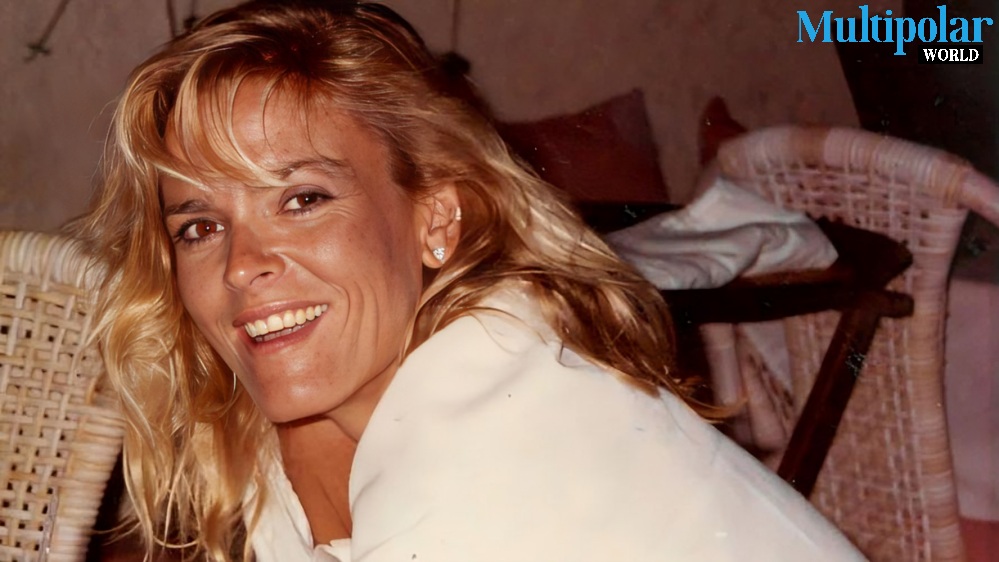
| Quick Facts | Details |
|---|---|
| Full Name | Nicole Brown Simpson (née Brown) |
| Date of Birth | May 19, 1959 |
| Birthplace | Frankfurt, West Germany |
| Date of Death | June 12, 1994 |
| Place of Death | 875 South Bundy Drive, Brentwood, Los Angeles |
| Age at Death | 35 years old |
| Nationality | American (German-American) |
| Father | Louis “Lou” Brown Jr. — USAF; died July 3, 2014, aged 90 |
| Mother | Juditha Anne Baur Brown — born Stuttgart, Germany; died November 8, 2020, aged 89 |
| Siblings | Denise Brown (older); Dominique Brown (younger); Tanya Brown (youngest) |
| High School | Dana Hills High School — graduated 1976; homecoming princess |
| Met OJ | 1977 — waitressing at The Daisy, Beverly Hills; she was 18, he was 30 |
| Married OJ | February 2, 1985 |
| Children | Sydney Brooke Simpson (b. October 1985); Justin Ryan Simpson (b. August 1988) |
| Police calls during marriage | 8 times |
| Documented abuse incidents | 60+ in diary found in safe deposit box |
| 1989 incident | OJ pleaded no contest — spousal battery; $470 fine; phone counselling |
| Divorce filed | February 25, 1992 |
| Settlement | $433,750 lump sum + $10,000/month child support + rental property |
| Moved to Bundy Drive | January 1994 |
| Ron Goldman | Platonic friend; waiter at Mezzaluna; returning Juditha’s forgotten glasses |
| Last dinner | Mezzaluna restaurant, June 12, 1994 — after Sydney’s dance recital |
| Murder time | Approximately 10:00pm, June 12, 1994 |
| Children after death | Sydney (8) and Justin (5) — grandparents granted temporary guardianship |
| Legacy | Nicole Brown Foundation — domestic violence awareness; Ascension Cemetery, Lake Forest |
Nicole Brown Simpson was thirty-five years old when she was killed on the night of June 12, 1994, outside the Brentwood condominium she had moved into five months earlier as part of the careful and deliberate process of rebuilding a life that seventeen years of entanglement with OJ Simpson — ten of them as his wife, all of them shadowed by documented violence and escalating fear — had made genuinely difficult to construct. She had two children, an $433,750 divorce settlement, a small condo with a fountain in the courtyard, and what multiple people who spoke to her in the final months of her life described as a growing determination to finally, completely, permanently separate herself from the man she had met when she was eighteen years old and he was the most famous athlete in America.
She did not complete that separation. The night she was murdered, she had spent the evening at a restaurant where a friend worked, celebrating her daughter’s dance recital with her mother and children, and the last telephone call she is known to have made was to that friend to tell him that her mother had forgotten her glasses at the restaurant and to ask if he could drop them off on his way home.
That friend was Ron Goldman. He brought the glasses. He never left.
The story of Nicole Brown Simpson is not, despite what the sheer volume of coverage about her murder has sometimes made it appear, primarily a story about the trial that followed it. It is the story of a woman who grew up in Southern California, was beautiful and warm and funny and generous by the accounts of everyone who knew her, fell in love at eighteen with a man whose public image bore almost no relationship to the private reality she encountered, documented what that reality contained in a diary found after her death, tried to leave, succeeded in leaving legally, was still trying to leave completely when she was killed — and whose death forced a public conversation about domestic violence that had previously been treated, in the American cultural mainstream, as a private matter between private people.
She deserves to be remembered as that woman. This is an attempt to do that.
Frankfurt, West Germany: The Beginning
Nicole Brown was born on May 19, 1959, in Frankfurt, West Germany — a city that was, in 1959, still in the process of recovering from the Second World War, divided from its eastern counterpart by the specific political geography of Cold War Europe, and home to a substantial American military presence that gave it the character of a community in which American servicemen and their families formed a significant social layer alongside the German civilian population.
Her father, Louis Hezekiah “Lou” Brown Jr., was a Kansas-born American serviceman who had been stationed in Germany — her mother, Juditha Anne Baur, was a German woman born in Stuttgart in 1931, whose own upbringing had been shaped by the specific experience of a German childhood through the Second World War and its immediate aftermath. Lou and Juditha met in Germany, married, and began their family there before eventually returning to the United States and settling in Southern California.
Nicole was the second of four daughters. Her older sister Denise Brown would become, after Nicole’s murder, the most publicly active member of the family — speaking frequently about domestic violence awareness, serving as a vocal presence throughout the 1995 trial, and continuing for decades to maintain the public conversation about what Nicole’s life had contained and what her death meant. Nicole’s younger sisters Dominique and Tanya also remained connected to the family’s advocacy work, appearing in the 2024 Lifetime documentary The Life & Murder of Nicole Brown Simpson — a production that allowed all three surviving sisters to tell their version of Nicole’s story on their own terms.
The Brown family settled in the Capistrano Beach and Dana Point area of Orange County, California — the Southern California coastal communities whose specific character, defined by beach culture, the Pacific horizon, and the particular atmosphere of affluent suburban California in the 1960s and 1970s, shaped Nicole’s adolescence and her sense of what life could be.
Dana Hills High School: The Girl She Was
Nicole Brown attended Dana Hills High School in Dana Point, graduating in 1976. She was, by every account of those who knew her at the time, a girl of genuine warmth and social ease — popular in the specific way that people whose friendliness is authentic rather than performed tend to be popular in high school environments. She was athletic, fond of the beach, and engaged with the social world of her community without the brittleness that competitive social environments sometimes produce.
She was elected homecoming princess at Dana Hills — a recognition whose significance is primarily social rather than biographical in any deeper sense, but that confirms the specific quality of her social presence at that point in her life: she was the kind of person whose peers recognised as genuinely likeable rather than merely strategically popular.
She did not go directly to college after graduating. She was eighteen years old, beautiful, in Southern California, and the specific combination of those facts pointed toward options that the formal educational pathway did not provide. She began working as a waitress — a job that, in the specific context of the upscale Los Angeles restaurant and entertainment world in the late 1970s, placed young women in the social orbit of the city’s celebrities, athletes, and industry figures in a way that few other entry-level positions could.
It was this context that introduced her to OJ Simpson.
The Daisy, 1977: The Meeting That Defined Everything
The Daisy was an upscale Beverly Hills nightclub — a members-only establishment whose clientele in the late 1970s included the specific tier of Los Angeles celebrity and wealth that professional athletes, entertainment industry figures, and the social world that surrounds both of those categories inhabit. Nicole Brown was eighteen years old, working there as a waitress in 1977.
OJ Simpson was thirty years old. He was, at that point, one of the most recognisable people in America: the Heisman Trophy winner, the NFL’s greatest running back, the face of the Hertz advertising campaigns that had made him the first Black man to headline a major national corporate advertising campaign. He was also, at the time he met Nicole, still technically married to Marguerite Whitley — the woman from his San Francisco high school days, with whom he had two surviving children and whose infant daughter Aaren had drowned in the family swimming pool in August 1979, the same year their divorce would be finalised.
The twelve-year age gap between Nicole Brown and OJ Simpson at the time of their meeting — she was eighteen, he was thirty — is a biographical fact whose significance is difficult to assess in isolation but is impossible to ignore in the context of what followed. The power differential encoded in that gap — the young woman beginning her adult life, the established celebrity at the peak of his public success — would inform the specific dynamics of a relationship in which OJ Simpson’s behaviour toward Nicole increasingly reflected an assumption that his entitlement to control her was as absolute as his entitlement to the admiration of the broader public.
They began dating in 1977. The relationship was serious from an early stage. Nicole moved into OJ’s Rockingham estate. The domestic violence — which Nicole would later document in her diary as beginning almost immediately — was not visible to the outside world, whose perception of the couple was shaped by the public presentation of a glamorous, successful pairing: the legendary athlete and the beautiful young woman who accompanied him to the events, the parties, and the public occasions that his celebrity produced.
February 2, 1985: The Wedding
OJ Simpson and Nicole Brown married on February 2, 1985 — eight years after they met, and after a relationship that had included the period of OJ’s divorce from Marguerite Whitley in 1979, the death of his daughter Aaren, and the years during which Nicole had been his companion without the formal status of wife.

She was twenty-five. He was thirty-seven. Their daughter Sydney Brooke Simpson was born in October 1985 — seven months after the wedding, a timing that some biographical sources have identified as a possible motivation for the decision to formalise the relationship. Their son Justin Ryan Simpson was born in August 1988.
The marriage, from the perspective of its public presentation, had the specific appearance of a successful union between a celebrated man and a beautiful woman whose life was defined by their relationship and their children. The private reality, which Nicole documented with considerable specificity in the diary that was found in her safe deposit box after her death, bore almost no relationship to that public presentation.
The Violence: What the Diary Contained
The safe deposit box that Nicole Brown Simpson’s family opened after her murder contained three things that together constitute the most complete and damning record of what the marriage had actually been: her personal diary, which documented more than sixty separate incidents of abuse across the years of their relationship; photographs of her beaten and bruised, taken at various points across those years to document injuries she appears to have anticipated might one day need to be proven; and letters from OJ Simpson apologising for specific incidents of violence, written in the specific language of remorse that abusers produce in the intervals between abusive episodes.
The diary entries describe incidents of physical violence — being hit, thrown against walls, grabbed by the throat — and incidents of psychological control: OJ monitoring her movements, interrogating her about her social contacts, appearing uninvited at places she was visiting, threatening consequences for perceived infractions of his expectations about her behaviour.
The most publicly documented single incident occurred on December 31, 1989 — New Year’s Eve. OJ beat Nicole severely enough that she fled the house and was found by police hiding in bushes outside, wearing only a bra and sweatpants, her face and body showing clear evidence of physical assault. She told the responding officers: “He’s going to kill me.” She had been married to OJ for four years. It was not the first incident. The police had been called to the Rockingham estate multiple times before.
OJ Simpson pleaded no contest to the charge of spousal battery. He was sentenced to probation, ordered to pay a $470 fine, and required to undergo counselling — which he completed by telephone rather than in person. Nicole received no protective order. The legal system’s response to the documented physical evidence of what he had done to her was, by the specific standards of the domestic violence prosecution framework of that era, entirely inadequate.
In subsequent years, Nicole attempted to use the legal system’s resources to protect herself and her children. She called the LAPD’s domestic violence hotline multiple times. She documented incidents. She consulted lawyers. She built the paper record that she understood she might eventually need — the photographs in the safe deposit box suggest a woman who, with considerable clarity, understood the trajectory of the situation she was in.
She filed for divorce on February 25, 1992. The divorce was settled in October 1992. She received a lump sum of $433,750, $10,000 per month in child support, and retained title to a rental property. OJ retained the Rockingham estate and the primary assets of his celebrity wealth.
Life After OJ: The Bundy Drive Years
The two years between Nicole’s divorce settlement in October 1992 and her murder in June 1994 were, by the accounts of those who knew her during that period, a time of genuine and deliberate reconstruction. She was building the life she had been prevented from building during the marriage — independent, defined on her own terms, centred on her children and her friendships and the specific pleasures of a Southern California existence that the Rockingham estate’s gilded cage had made simultaneously abundant and suffocating.
In January 1994, she moved into the condominium at 875 South Bundy Drive in Brentwood — a smaller, more personal space than the Rockingham estate, chosen for its proximity to her children’s school and its distance from OJ’s orbit. The condominium had a fountain in its courtyard; she planted flowers; she organised her space around the children’s needs and her own preferences rather than around the requirements of a celebrity household.
The post-divorce relationship with OJ was, however, not the clean separation that the legal proceedings had been designed to produce. He continued to insert himself into her life — appearing at her residence uninvited, monitoring her social activities, calling her repeatedly, and — in the months before her murder — escalating a pattern of behaviour that multiple people who were in contact with Nicole during this period have described as increasingly alarming.
Nicole confided in friends that she was frightened. She told Kris Jenner — a close friend from the social world they had shared during the OJ years — during a phone call on June 11, 1994, that there was something “very important” she needed to tell her about her “volatile” situation. They arranged to speak the following day. Nicole was murdered before that conversation could take place.
She also confided in her therapist, in friends, and in family members that OJ had been following her and that she was worried about what he might do. She had filed a report with the LAPD. She had done everything that the resources available to her in 1994 made possible to document and address the specific danger she was facing.
Ron Goldman: Who He Was
The biographical flattening that the coverage of the murders and the subsequent trial produced reduced Ron Goldman to a series of characterisations — Nicole’s boyfriend, her lover, the man she was having an affair with — that do not accurately represent the available evidence about the actual nature of their relationship.
Ron Goldman was twenty-five years old. He had grown up in the Chicago suburb of Buffalo Grove, Illinois, moved to Los Angeles to pursue acting and modelling, and was working as a waiter at Mezzaluna — the Brentwood restaurant that Nicole frequented with her friends and family. He and Nicole had been friends for approximately six weeks before the night of their murders. Multiple people who knew both of them described the relationship as platonic — a new friendship between two people who moved in overlapping social circles.
On the evening of June 12, 1994, Nicole took her children and her parents — Lou and Juditha Brown — to Mezzaluna for dinner following Sydney’s dance recital. It was an ordinary family evening at a restaurant Nicole liked. After dinner, Juditha Brown discovered she had left her glasses at the restaurant. She called Nicole. Nicole called Ron Goldman, who was ending his shift, and asked if he could drop the glasses at the condo on his way home.
Goldman agreed. He changed out of his work clothes and drove to Bundy Drive. He never left.
June 12, 1994: The Last Night
The sequence of the evening of June 12, 1994, has been reconstructed from witness accounts, phone records, and physical evidence in extraordinary detail.
Nicole and her family dined at Mezzaluna. After dinner, she went home and put Sydney and Justin to bed. Juditha Brown’s call about the forgotten glasses came after dinner. Nicole’s final call, to Goldman, was made at approximately 9:37pm. Goldman arrived at Bundy Drive at approximately 10:00pm.
Sydney and Justin were asleep in the upstairs bedrooms. Nicole’s Akita dog, Kato, was in the courtyard. The murders occurred outside, in the narrow walkway adjacent to the front gate of the condominium — a space whose physical dimensions mean that what happened there was both swift and violent.
The autopsy established that Nicole was stabbed seven times in the neck and scalp and received a 14-centimetre gash across the throat that severed both carotid arteries and the jugular veins — the wound that caused her death. She was alive for at least a minute after the first wounds were inflicted before the final, fatal injury ended her life. She was found with her hands tied behind her back.
Ron Goldman had fought. The physical evidence at the scene — defensive wounds on his hands, the distribution of the blood — indicated a sustained struggle against an attacker who was physically powerful and armed with a knife. He had been stabbed multiple times.
The Akita dog, Kato — whose blood-stained paws led neighbours to follow him to the scene — was found wandering in the neighbourhood shortly after midnight. The bodies were discovered by a neighbour walking her dog at approximately 12:10am on June 13.
Sydney and Justin, aged eight and five, were found asleep in the upstairs bedrooms of the condominium by police responding to the scene. Their grandparents, Lou and Juditha Brown, were granted temporary guardianship the following morning.
The Children: Sydney and Justin
Sydney Brooke Simpson and Justin Ryan Simpson grew up, after their mother’s murder, in the specific and impossible circumstance of children whose mother was killed and whose father was acquitted of killing her. They spent the immediate aftermath of June 12, 1994, in the care of their maternal grandparents. They subsequently returned to OJ’s care following his criminal acquittal in 1995, a custody arrangement whose specific terms were arranged against the backdrop of the civil trial and the Goldman family’s ongoing pursuit of the civil judgment.
Both Sydney and Justin have maintained complete privacy as adults. They have given no interviews, made no public statements about their parents or the trial, and have lived — consistently and deliberately — outside the public record that their family history places them adjacent to. Sydney is currently in her late thirties; Justin is in his mid-thirties. They represent, in their privacy, the most direct expression of what Nicole Brown Simpson’s murder actually cost: two children who lost their mother at five and eight years old and who have spent their adult lives carrying that loss without public support or public acknowledgement beyond the biographical footnotes their names represent in the coverage of the trial.
Legacy: The Diary, the Foundation, and the Conversation
Nicole Brown Simpson’s murder did not, in any simple way, produce the public conversation about domestic violence that her diary and the 1989 police records and the eight calls to the Rockingham residence during the marriage should have produced while she was alive to benefit from it. The murder did produce a conversation — but the conversation was almost immediately subsumed into the larger and louder conversation about race, policing, the criminal justice system, and the specific drama of the Trial of the Century, in which Nicole Brown Simpson became less a person than a victim, less a woman than a position in someone else’s argument.
Her father, Lou Brown, established the Nicole Brown Foundation — an organisation dedicated to supporting victims of domestic violence and raising awareness about the specific pattern of escalating control and violence that Nicole’s biography documented. The foundation continued operating after Lou Brown’s death on July 3, 2014, at the age of ninety. Nicole’s mother Juditha Brown died on November 8, 2020, at the age of eighty-nine.
Her sisters — Denise, Dominique, and Tanya — have continued to speak about Nicole in the specific terms of a person rather than a case. Denise Brown has been particularly active in domestic violence advocacy, speaking publicly across decades about what Nicole’s life contained and what the legal system’s inadequate response to the documented violence she experienced contributed to the outcome of June 12, 1994.
Nicole Brown Simpson is buried at Ascension Cemetery in Lake Forest, California — the Orange County community where her family had built their California life and where she spent her adolescence as the homecoming princess of Dana Hills High School, before the sequence of events that began in a Beverly Hills nightclub in 1977 produced the biography that the world eventually received.
The 2024 Lifetime documentary The Life & Murder of Nicole Brown Simpson — produced with the participation of Denise, Dominique, and Tanya — was the most recent attempt to restore the human dimension to a story that the Trial of the Century had rendered almost entirely procedural. It told the story of a woman who was born in Frankfurt in 1959, grew up in Orange County, was beautiful and warm and funny, fell in love at eighteen with a man who hurt her, tried to leave, documented what was done to her, and was killed at thirty-five on a June evening while her children slept upstairs.
Conclusion
Nicole Brown Simpson was born in Frankfurt on May 19, 1959. She was an Orange County girl who liked the beach and became homecoming princess and went to work as a waitress in Beverly Hills and met OJ Simpson when she was eighteen years old. She spent seventeen years in a relationship whose private reality was documented in sixty-plus diary entries, in photographs of bruises and injuries, in police reports from eight separate incidents, and in the words she spoke to a police officer hiding in the bushes outside her house on New Year’s Eve 1989: “He’s going to kill me.”
She divorced him. She settled her case. She moved to Bundy Drive. She put flowers in the courtyard. She put her children to bed on the evening of June 12, 1994, and walked outside to meet a friend who was returning her mother’s forgotten glasses.
She was thirty-five years old. Her daughter was eight. Her son was five. The friend who was returning the glasses was twenty-five and had known her for six weeks.
She deserved to grow old. She deserved to watch her children grow up. She deserved the life she was trying to build in the condo on Bundy Drive when the person she had told the police was going to kill her came back one final time.
Nicole Brown Simpson was not a supporting character in someone else’s story. She was the story — and the story was a woman’s life, ended before it was finished.
