

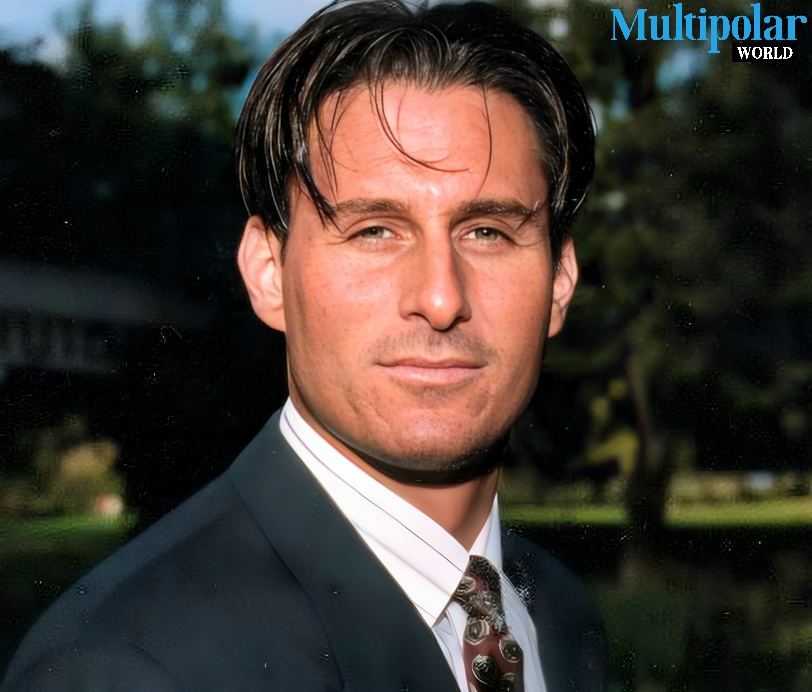
| Quick Facts | Details |
|---|---|
| Full Name | Ronald Lyle Goldman |
| Date of Birth | July 2, 1968 |
| Birthplace | Chicago, Illinois, USA |
| Raised | Buffalo Grove, Illinois |
| Date of Death | June 12, 1994 |
| Place of Death | 875 South Bundy Drive, Brentwood, Los Angeles |
| Age at Death | 25 years old |
| Religion | Jewish |
| Height | 6 ft 1 in (1.85 m) |
| Father | Fred Goldman (b. December 6, 1940) — remarried Patti Glass |
| Mother | Sharon Rufo (née Fohrman) — divorced Fred 1974 |
| Sister | Kimberly “Kim” Goldman (younger) — victim advocate; author |
| High School | Adlai E. Stevenson High School, Lincolnshire, Illinois — graduated 1986 |
| College | Illinois State University (one semester); Pierce College, Los Angeles (briefly) |
| Jobs | Tennis instructor; employment headhunter; model; promoter; waiter at Mezzaluna |
| EMT licence | Earned — chose not to pursue that career |
| Dream | Open a restaurant named after the ankh symbol (Egyptian eternal life) |
| Ankh tattoo | Had ankh tattoo — personal symbol of his life philosophy |
| TV appearance | Studs — dating game show hosted by Mark DeCarlo; early 1992 |
| Girlfriend | Jacqui Bell — dated nearly 2 years; broke up 3 months before murder |
| Met Nicole | April 1994 — approximately 6 weeks before murder; platonic friendship |
| Night of murder | Returning Juditha Brown’s glasses forgotten at Mezzaluna; clocked out 9:33pm |
| Plans that night | Meeting bartender Stewart Tanner for a night out after returning glasses |
| Murder time | Between 10:15pm–11:00pm, June 12, 1994 |
| Physical evidence | Defensive wounds on hands — fought back against attacker |
| Buried | Valley Oaks Memorial Park, Westlake Village, California |
| Civil judgment | Fred Goldman awarded $33.5 million (1997); $58 million estate settlement November 2025 |
| If I Did It | Book rights awarded to Goldman family — Kim and Fred published with commentary |
| Kim Goldman | Victim advocate; wrote Media Circus; hosts podcast Confronting: OJ Simpson |
On the evening of June 12, 1994, Ron Goldman clocked out of his shift at Mezzaluna restaurant in Brentwood at 9:33pm. He had plans — a friend named Stewart Tanner, a bartender, was expecting him for a night out. It was a Sunday. He was twenty-five years old, physically fit, full of the energy of someone who had built their daily life around the gym and the outdoors and the social world of young Los Angeles. Before he left for the evening, he agreed to do a favour: return a pair of glasses that one of the restaurant’s regulars had forgotten at her table during dinner.
The regular was Nicole Brown Simpson. The glasses belonged to Nicole’s mother, Juditha, who had been at the restaurant that evening with her daughter and grandchildren following a dance recital. Nicole had called the restaurant. Ron had offered to drop the glasses off at Nicole’s Bundy Drive condominium on his way out.
He changed out of his work clothes. He went to the bar, had a soft drink — he did not drink alcohol — and spent approximately fifteen minutes with friends. He picked up the glasses. He drove to Bundy Drive. He never met Stewart Tanner. He never opened the restaurant he had been planning for years. He never got to live any of the life he was in the middle of building.
The biography of Ron Goldman exists, in the public record, primarily in the shadow of what happened to him rather than in the light of who he was before it. The trial that followed his murder — one of the most watched and most consequential legal proceedings in American history — returned to him periodically as a victim in a case about someone else, and returned to his family as litigants in a civil suit that produced a judgment whose enforcement stretched across three decades and was only partially settled after the death of the man found liable for his murder. He was twenty-five years old. He wanted to open a restaurant named after the Egyptian symbol for eternal life. He had an ankh tattooed on his body. He was a tennis instructor and a waiter and a model and a promoter and a person who was genuinely liked by the people who knew him, and who died on a Sunday evening in June because he agreed to return a pair of forgotten glasses.
This is his story — told, as it deserves to be, on its own terms.
Chicago and Buffalo Grove: The Midwestern Beginning
Ronald Lyle Goldman was born on July 2, 1968, in Chicago, Illinois — the third-largest city in the United States, whose specific geography of neighborhoods and cultural identity is among the most richly documented in American urban history. He grew up in Buffalo Grove — a suburb in Lake County, in the northern reaches of the Chicago metropolitan area, whose character in the 1970s and 1980s was shaped by the specific culture of the Jewish-American professional middle class that had settled extensively in the northern suburbs of Chicago across the postwar decades.
His parents were Fred Goldman — born December 6, 1940, the father who would become, after Ron’s murder, one of the most persistent and publicly visible advocates for civil accountability in American legal history — and Sharon Rufo, née Fohrman, whose marriage to Fred ended in 1974 when Ron was six years old. The divorce and its aftermath produced the specific family configuration of Ron’s childhood: raised primarily by his father and, subsequently, by Fred’s second wife Patti Glass, who brought three children of her own into the marriage.
Ron’s younger sister Kim Goldman — born after him, raised in the same household — would later become the family member whose public advocacy was most sustained and most specifically focused on the experience of victims’ families in the criminal justice system. Her book Media Circus, her podcast Confronting: OJ Simpson, and her decades of work in victim advocacy are the living dimension of Ron Goldman’s legacy — the expression, in her ongoing public life, of what was taken from the family on June 12, 1994.
Growing up in Buffalo Grove in the 1970s and early 1980s gave Ron Goldman the specific formation of a midwestern Jewish suburban childhood: communal, sports-oriented, shaped by the values of a community that placed considerable emphasis on professional success and educational achievement alongside the religious and cultural traditions that defined the neighborhood’s identity. Fred Goldman was an active and engaged father — the kind of parent whose presence in a child’s life leaves a specific imprint of values and expectations that subsequent events can test but not erase.
Ron attended Twin Groves Junior High School before moving on to Adlai E. Stevenson High School in Lincolnshire, Illinois — one of the largest and most academically respected public high schools in the Chicago metropolitan area, whose alumni list includes a range of figures in entertainment, business, and public life. He graduated in 1986.
The Road West: From Illinois State to Los Angeles
After graduating from Stevenson in 1986, Ron Goldman enrolled at Illinois State University — the large public research university in Normal, Illinois, where he intended to study psychology and had expressed interest in pledging the Sigma Nu fraternity. The specific combination of a psychology major and fraternity membership is the portrait of a young man oriented toward social connection and human behaviour — qualities that the accounts of those who knew him consistently emphasise as central to his character.
He spent one semester at Illinois State. The reasons for his departure are not documented in the public record with specific detail, but the broader context provides a partial explanation: his father Fred and stepmother Patti had relocated to California, and the gravitational pull of family combined with the specific pull of Los Angeles — the city that, for a physically attractive young man with social intelligence and an entrepreneurial instinct, offered possibilities that Normal, Illinois, could not — drew Ron westward.
He moved to California when he was eighteen years old — an age at which the specific combination of youth, physical capability, and social confidence that California rewards was at its peak in Ron Goldman’s biography. He attended Pierce College in Los Angeles briefly, continuing the educational trajectory that Illinois State had begun without fully completing it. He was, by multiple biographical accounts, someone whose intelligence and capability expressed themselves more readily through practical activity and social engagement than through formal academic institutions.
The jobs he took in Los Angeles across the years between his arrival and his death in June 1994 describe a young man building his life through the specific combination of physical skill, service industry work, and entrepreneurial energy that the Los Angeles economy makes available to people who are willing to work across multiple domains simultaneously. He worked as a tennis instructor — a job that required the specific combination of athletic capability and the ability to teach, to communicate, to adjust his approach to the specific needs of individual students. He worked as an employment headhunter — placing people in jobs, which required the social intelligence to assess both candidates and employers with accuracy. He worked as a model and promoter. And he worked as a waiter at Mezzaluna — the Brentwood restaurant that would place him on Bundy Drive on the night of June 12, 1994.
He also earned an EMT licence — the Emergency Medical Technician credential that would have allowed him to work in emergency medical services. He chose not to pursue that career direction. The choice reflects the specific quality of a person whose capabilities were broad enough to generate multiple professional options and whose particular vision for his future was, in the end, more specific than any of those options individually.
The Dream: A Restaurant Named for Eternal Life
The most revealing biographical detail about Ron Goldman — the one that most clearly illuminates who he was and what he was working toward — is the restaurant he intended to open. He had a specific concept: an establishment named after the ankh, the ancient Egyptian hieroglyphic symbol that represents life and immortality. He had researched the concept, discussed it with friends and family, and built around it the kind of specific, named ambition that distinguishes people who are genuinely pursuing something from people who are vaguely considering it.
He had the symbol tattooed on his body — the ankh as a permanent expression of the philosophy he associated with it: the belief in life lived fully, in the extension of one’s existence into something that outlasts the individual moment.
The specific irony of Ron Goldman — who tattooed the Egyptian symbol for eternal life on his body, who wanted to name his restaurant after it, who was twenty-five years old and physically vital and full of the specific energy of someone in the early stages of the life they have chosen — dying violently on a June evening before any of it could materialise is one of those biographical facts that resists comfortable accommodation within any framework that makes the loss acceptable.
The restaurant was not built. The ankh remains the symbol of someone who believed in it enough to mark his skin with it, and whose life ended before the belief could be translated into the specific form he had planned.
Life in Los Angeles: The Person People Knew
The accounts of Ron Goldman gathered from friends, former colleagues, and acquaintances in the years following his death describe a person of consistent and genuine warmth — someone whose social ease was the expression of actual interest in the people around him rather than the performance of interest that social environments sometimes produce in people who are primarily interested in themselves.
He was physically disciplined — a regular at the gym, careful about his diet, someone whose 6 ft 1 in frame and physical fitness were the result of consistent effort rather than genetic luck alone. He avoided alcohol — a detail that his friends have emphasised as characteristic rather than conspicuous: it was simply who he was, a preference that reflected a broader orientation toward health and physical wellbeing that the tennis instruction and gym work also expressed.
In early 1992, he appeared on Studs — the Fox dating game show hosted by Mark DeCarlo in which male contestants attempted to identify which women had given the most flattering descriptions of their dates. The appearance was the kind of thing a twenty-three-year-old in Los Angeles with Ron Goldman’s physical appearance and social confidence might do: a low-stakes public amusement, a small exercise in the entertainment industry’s peripheral gravity. It was not a career aspiration. It was a Sunday afternoon, more or less.
His romantic life in the years before his death included a nearly two-year relationship with Jacqui Bell — a woman he had been serious about, whose departure from the relationship approximately three months before his murder represented the most significant personal loss of his adult life to that point. The end of the Jacqui Bell relationship, and Ron’s subsequent adjustment to being single again, was the specific personal context in which his friendship with Nicole Brown Simpson developed.
Meeting Nicole: Six Weeks, and a Friendship
Ron Goldman met Nicole Brown Simpson in April 1994 — approximately six weeks before the night of his death. They moved in overlapping social circles: Mezzaluna was a restaurant that Nicole frequented, and the social world of Brentwood in 1994 was small enough that people with mutual connections encountered each other regularly.
Multiple people who knew both of them have described their relationship as platonic — a new friendship between two people who liked each other and were spending time together in the way that people who are not romantically involved spend time together: socially, in groups, in the ordinary contexts of their shared social world. Nicole had borrowed Ron’s white Ferrari on at least one occasion — a detail that some sources have used to suggest romantic involvement but that is equally consistent with the easy informality of a close new friendship between people who trusted each other.
The defence team in the 1995 criminal trial attempted to characterise the relationship as romantic — to establish an alternative narrative about Nicole’s personal life that would complicate the prosecution’s domestic violence framework. The available evidence does not support the romantic characterisation, and multiple witnesses who knew both parties consistently described a friendship of six weeks’ standing rather than a romantic entanglement.
On the evening of June 12, 1994, Ron Goldman was working his shift at Mezzaluna. Nicole Brown Simpson was dining at the restaurant with her children, her parents, and other family members following Sydney’s dance recital. After the meal, the family left. Juditha Brown, Nicole’s mother, realised she had forgotten her glasses at the restaurant. She called Nicole. Nicole called Ron.
Ron had already clocked out of his shift at 9:33pm. He agreed to return the glasses on his way to meet his friend Stewart Tanner — a bartender who was expecting him for a night out. He changed out of his work clothes. He spent approximately fifteen minutes at the restaurant bar, had a soft drink, talked with friends. He picked up the glasses. He drove to Bundy Drive.
He was there when the murders occurred — estimated between 10:15pm and 11:00pm on June 12, 1994.
The Night of June 12, 1994: What the Evidence Shows
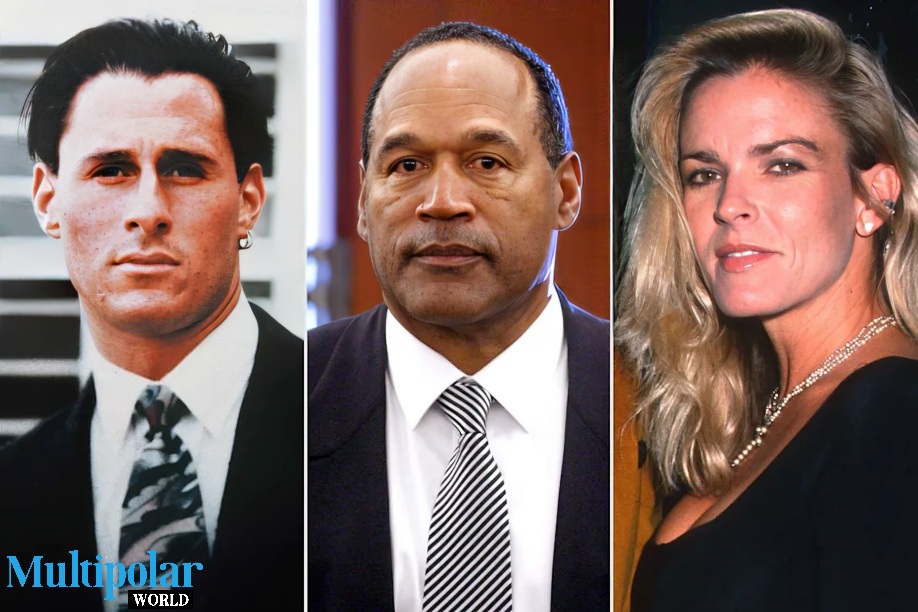
The physical evidence at the crime scene told a specific story about what Ron Goldman’s final minutes contained. Unlike Nicole Brown Simpson, who appears to have been taken by surprise and was unable to mount a sustained physical defence, Ron Goldman fought back.
The defensive wounds on his hands — cuts and abrasions consistent with grabbing at a blade, with attempting to deflect knife strikes — were noted in the autopsy and in the forensic analysis of the crime scene. The distribution of blood and physical evidence in the narrow walkway outside the condominium’s gate was consistent with a prolonged struggle: someone who was fighting against an attacker who was physically powerful and who had a knife.
Ron Goldman was 6 feet 1 inch tall, physically fit, and twenty-five years old. He fought. The evidence confirms it. The outcome, given the physical dynamics of an armed attacker who appears to have been both larger and more violently capable, was not changed by the fight. But the fight happened, and it is part of who Ron Goldman was in the moment that defines his biographical ending.
He was stabbed multiple times. The wounds were severe. He died at the scene.
The Akita dog, Kato, who had been in the courtyard, wandered into the neighbourhood with blood-stained paws and led neighbours to the scene at approximately 12:10am on June 13. The bodies of Nicole Brown Simpson and Ron Goldman were discovered at that time. Ron Goldman was twenty-five years and eleven months old. He would have turned twenty-six on July 2, 1994 — twenty days after the night he returned a pair of forgotten glasses.
He was buried at Valley Oaks Memorial Park in Westlake Village, California. His Jewish gravestone was unveiled in June 1995 — the same month that the criminal trial of OJ Simpson was in full session, with Ron’s father Fred Goldman attending the proceedings daily and providing the most consistently human presence in the courtroom coverage: the father of the murdered son, sitting in the gallery, watching.
Fred Goldman: The Father Who Never Stopped
Fred Goldman became, after June 12, 1994, one of the most persistent and publicly visible advocates for civil accountability in American legal history. He attended the 1995 criminal trial regularly, and his visible emotional responses to the proceedings — and to the October 3, 1995 acquittal — were among the most honest and unmediated moments in the entire media coverage of the case.
When the criminal verdict came in, Fred Goldman wept in the courtroom. “There was no justice today,” he told the cameras outside. The statement was direct and unambiguous, and it represented the specific emotional truth of a father who had watched his son reduced to evidence in a nine-month proceeding that ultimately produced an acquittal.
He pursued the civil trial — the February 1997 proceeding in which a civil jury found OJ Simpson liable for the deaths of Nicole Brown Simpson and Ron Goldman. The jury awarded $33.5 million in compensatory and punitive damages. OJ Simpson structured his finances — moving to Florida, protecting his NFL pension under California law — to avoid paying the judgment. Fred Goldman spent the next twenty-seven years pursuing its enforcement.
When OJ Simpson died on April 10, 2024, the civil judgment had not been paid in full. On November 17, 2025 — more than a year after OJ’s death — OJ’s estate agreed to pay approximately $58 million to the Goldman family as a settlement of the outstanding civil judgment, incorporating the accumulated interest on the original 1997 award across nearly three decades of unpaid balance.
Fred Goldman has said, across the years, that the money was never the point — that no financial settlement could constitute justice for what was taken on June 12, 1994. The pursuit of the judgment was, in his framing, the only mechanism the legal system provided for insisting that accountability exist in some form, and he used it across decades with a consistency that reflects the specific quality of a parent who will not stop.
Kim Goldman: The Sister Who Speaks
Kimberly Goldman — Ron’s younger sister — has built, across the decades since June 12, 1994, a career in victim advocacy that is simultaneously the most personal and the most public expression of her brother’s legacy.
She worked for years within victim services organisations, developing the specific expertise of someone who understands, from direct personal experience, what families of murder victims navigate within a criminal justice system that treats them as peripheral to proceedings in which they are centrally affected. She wrote Media Circus — a book examining the experience of being a victim’s family in the most mediated legal proceeding in American history. She hosts the podcast Confronting: OJ Simpson — a production that has allowed her to engage publicly with the documentary and cultural coverage of the case that has continued to appear across the decades since the trial.
When OJ Simpson published If I Did It — his 2006 book that described, in hypothetical terms, how the murders might have been committed — a bankruptcy court awarded the book’s rights to the Goldman family as part of the unsatisfied civil judgment. Kim and Fred Goldman published the book with a subtitle — Confessions of a Killer — and with contextual commentary that frames the original text within the civil jury’s finding of liability. The decision to publish rather than suppress was deliberate: a choice to use OJ’s own words as evidence of what the criminal jury’s acquittal had declined to establish.
Legacy: The Man Behind the Case
Ron Goldman deserves, in the specific biographical sense that all murdered people deserve, to be remembered as a person rather than a victim. He was born in Chicago on July 2, 1968. He grew up in Buffalo Grove. He moved to California because his family did and because California offered possibilities. He played tennis and taught it to other people. He waited tables at a good restaurant in Brentwood. He planned to open a restaurant named after the symbol for eternal life and tattooed that symbol on his body as a statement of intent. He appeared on a dating game show. He had a serious relationship that ended. He made a new friend named Nicole Brown Simpson. He agreed to return a pair of forgotten glasses.
He fought back against the person who came to kill him. The fight is documented in the wounds on his hands. He fought, and he died anyway, twenty days before his twenty-sixth birthday.
His father spent thirty-one years pursuing accountability through the legal system. His sister has spent those same years speaking about what it means to lose a brother to violence and to watch the criminal justice system produce an outcome that does not match the evidence. His family received a settlement from an estate in November 2025 that acknowledged, in financial terms, the liability that the civil jury established in 1997 and that was never paid during the lifetime of the man found liable.
Ron Goldman wanted to name his restaurant after the ankh — the Egyptian symbol of eternal life. The restaurant was never built. But the symbol he chose, and the reasons he chose it, say something true about who he was and what he believed his life was for. He believed in life lived fully. He believed in it enough to tattoo it on his skin.
He was twenty-five years old. He deserved to find out if he was right.
