

| Quick Facts | Details |
|---|---|
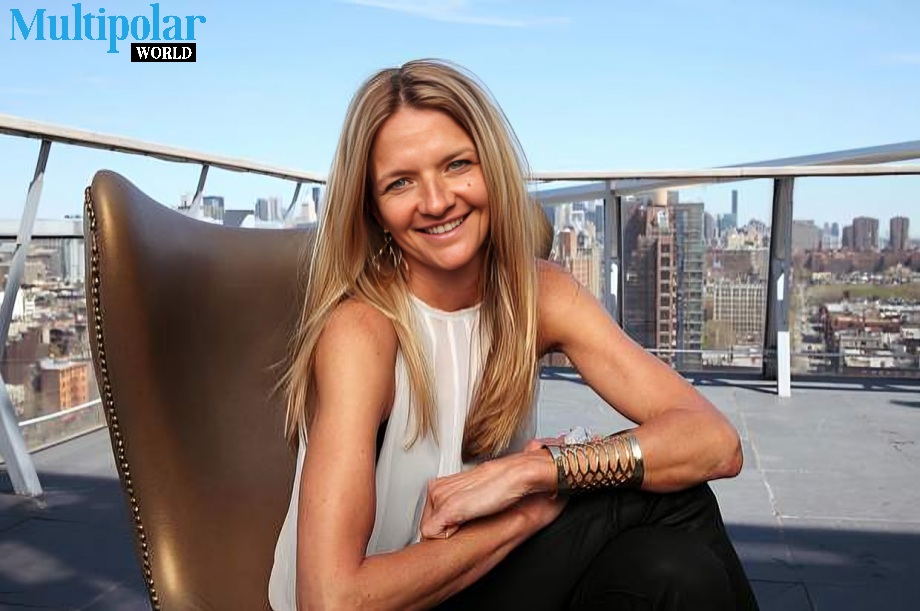
| Full Name | Sherry McConkey |
| Birthplace | South Africa |
| Moved to Tahoe | 1991 |
| Nationality | South African-American |
| Occupation | Filmmaker; environmental activist; nonprofit founder; producer |
| Residence | Lake Tahoe / Olympic Valley, California, USA |
| Late husband | Shane McConkey (December 30, 1969 – March 26, 2009) — professional skier; BASE jumper; freeskiing revolutionary; US Ski and Snowboard Hall of Fame 2011 |
| How they met | At Humpty’s bar, Tahoe City; Shane made joke about her eyes matching his Porsche |
| Marriage | May 29, 2004 — Thailand |
| Daughter | Ayla McConkey (b. 2005) — was 3 when Shane died |
| Shane’s death | March 26, 2009 — ski-BASE jump on Sass Pordoi, Italian Dolomites; one ski failed to release; corrected spin but too late to deploy parachute; age 39 |
| Shane’s innovations | Father of reverse sidecut and reverse camber skis (rocker technology); revolutionised freeskiing and ski-BASE jumping |
| Shane’s Hall of Fame | US Ski and Snowboard Hall of Fame — April 2, 2011 |
| Film 1 | McConkey (2013) — co-produced; Red Bull Media House/Matchstick Productions; worldwide tour |
| Film 2 | Weak Layers (2023) |
| Foundation | Shane McConkey Foundation — founded 2012; environmental conservation; youth education; donated nearly $1 million |
| Make-A-Wish | Shane was close to Make-A-Wish Foundation; Sherry continued after his death |
| EcoChallenge | Launched 2016 — national student climate change competition; 1,300+ participants |
| Pain McShlonkey Classic | Annual snowblade race at Palisades Tahoe; outrageous outfits; raises nonprofit funds |
| TED Talk | Gave TED Talk about life with Shane, his death, and moving forward |
| Key quote | “Shane always taught me to believe I could do anything I wanted to do” |
| Ayla in 2026 | ~20–21 years old |
| Net worth (est.) | $500,000–$1 million |
In March 2009, a woman from South Africa who had come to Lake Tahoe in 1991 because she saw a harvest moon rising over the water and her heart stopped — who had met her husband at a bar in Tahoe City where he made a joke about her eyes matching the colour of his Porsche — became a widow when that husband’s ski failed to release during a BASE jump in the Italian Dolomites and he ran out of sky before he could deploy his parachute.
Sherry McConkey was left with a three-year-old daughter, a legendary name, and a choice about what to do next.
She chose forward.
Everything she has done since March 26, 2009 — the documentary she co-produced, the foundation she built, the student competition she launched, the snowblade race she kept going, the TED Talk she gave, the film career she continued — is the biography of someone who chose forward when the easier choice was to stop. The South African woman who fell in love with Lake Tahoe before she fell in love with its most famous skier has spent seventeen years since his death making sure that neither the lake nor the man who lived on its edge is forgotten.
South Africa and the Harvest Moon That Changed Everything
Sherry McConkey was born in South Africa — the specific details of her birthplace, her family, and her early years kept private with the deliberate intention of someone who understands that her story is most importantly the story of what she chose to do with what happened to her, not the story of where she began.
She was, by the evidence of her subsequent life, someone whose formation in South Africa produced an independence of spirit and a physical fearlessness that the Lake Tahoe mountain community would recognise as its own — the specific character of someone who grew up in a large landscape and developed the specific orientation toward the outdoors that large landscapes tend to produce in the people who spend their childhoods within them.
In 1991, she arrived at Lake Tahoe for the first time. She had been travelling, as independent young women from countries whose landscapes are large and whose cultures encourage a specific kind of self-reliance tend to travel — following the destinations that caught her attention and the communities that felt like they might be worth inhabiting.
The harvest moon was rising over the lake. Her heart stopped. “Your heart stops,” she has said of that first sight. “I never left because I fell in love with the place.”
Lake Tahoe in 1991 was exactly what it has always been: one of the most beautiful places on the North American continent, a high-altitude alpine lake whose specific combination of extraordinary clarity, mountain framing, and the particular light of the Sierra Nevada has made it the destination for generations of people who came for a season and stayed for a life. The skiing community that inhabited Squaw Valley — now Palisades Tahoe — on the lake’s western shore was the specific community of people whose professional and recreational lives were organised around vertical drop, powder snow, and the specific culture of a mountain town that takes the sport seriously without taking itself too seriously.
She settled. She skied. She became part of the community that would eventually introduce her to the man whose gravity matched the mountain’s.
Shane McConkey — Who He Was Before She Met Him
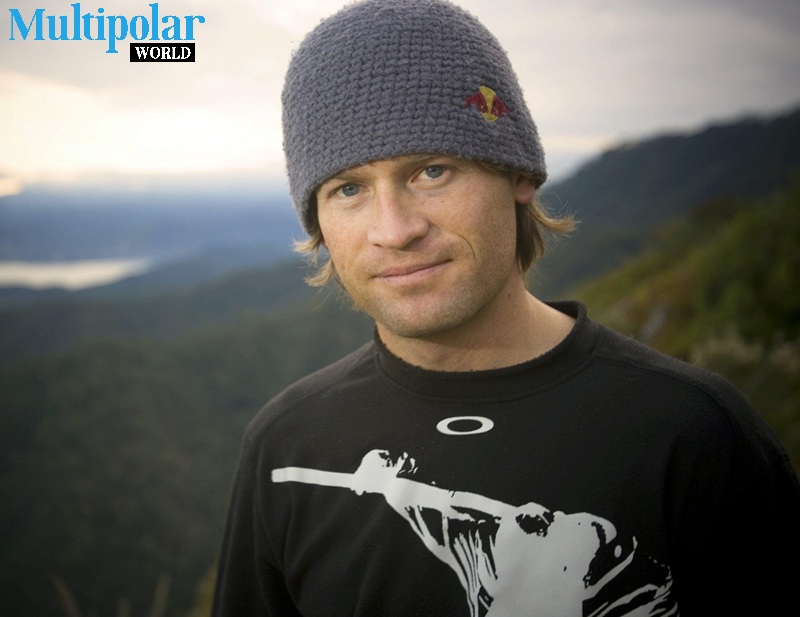
Shane McConkey was born on December 30, 1969, in Vancouver, British Columbia — the son of Jim McConkey, a ski instructor and figure who had been significant in the development of the ski industry across the previous generation, giving Shane a relationship with the mountain that was professional, personal, and genetic before it was anything else.
He grew up in the specific milieu of a family whose life was organised around skiing — attending Burke Mountain Academy in Vermont and subsequently enrolling at the University of Colorado Boulder before the pull of the mountains proved stronger than the pull of the classroom. He dropped out and committed fully to the specific career whose combination of competitive skiing, extreme freeskiing, and the emerging practice of ski-BASE jumping would eventually make him one of the most influential figures in the history of his sport.
His technical innovations were the dimension of his career that the ski industry has recognised most formally: he was the father of reverse sidecut and reverse camber skis — the rocker technology that revolutionised the way skis interacted with soft snow and that has, in the decades since his introduction of the concept, become the standard design approach for powder and all-mountain skis worldwide. He was among the first people to mount ski bindings onto water skis for use in Alaskan powder skiing, opening up terrain that conventional equipment could not access.
He combined these innovations with a performance career that included over 700 BASE jumps, a double front flip off the Eiger, and appearances in dozens of ski films whose specific combination of technical audacity and comedic self-awareness — Shane performing as his alter ego Saucer Boy and the fictional character McShlonkey — made him the most entertaining as well as the most capable person in the room.
He was inducted into the US Ski and Snowboard Hall of Fame on April 2, 2011 — posthumously, two years after his death.
The word that everyone who knew him uses, alongside technical, is funny. He was genuinely, consistently, freely funny — not performing humour but living in it, finding the absurdity in every situation with the specific lightness of someone who had decided that the mountain was too serious to be taken seriously and that skiing was too important to be solemn about.
Humpty’s Bar and the Beginning
The specific romance whose trajectory produced Ayla McConkey and the Shane McConkey Foundation and the documentary and the EcoChallenge began at Humpty’s — a bar in Tahoe City — at a moment that Sherry has described with the warmth of someone who has been telling the story for long enough to enjoy it rather than own it too tightly.
She saw him. He was goofy and fun and lovely to be around. “The first time I met him I saw him at this place called Humpty’s in Tahoe City. He’s just so goofy and fun and lovely to be around.”
His opening line, by the account that has entered the public record, was a joke about her eyes matching the colour of his Porsche — the specific combination of genuine observation and self-deprecating absurdity that the people who knew Shane consistently describe as his conversational style: disarming precisely because it was both sincere and ridiculous simultaneously.
They dated for approximately five years before marrying. The timeline reflects two things: the specific independence of a woman who had structured her life around her own choices rather than the expectations of a relationship’s conventional progression, and the specific freedom of a man whose professional schedule — filming in Alaska, BASE jumping in Europe, competing wherever competition took him — was not easily accommodated by the standard domestic rhythms that early marriage tends to require.
“Being alone was important and his schedule was fine in the sense that I needed my alone time,” she has said. The relationship worked, in part, because both people in it understood that autonomy was not a threat to love but a condition of it.
They married on May 29, 2004, in Thailand — the destination wedding of two people who had both built their lives around going to the most beautiful places available and who found, in Thailand’s particular combination of warmth and extraordinary landscape, exactly the right setting for the occasion.
Their daughter Ayla McConkey was born in 2005.
Living With Risk — The Reality No One Talks About
The public narrative about extreme sports athletes tends to bifurcate into two equally reductive positions: the heroic framing in which the athlete’s willingness to accept risk is a form of courage whose logic the armchair observer need only admire from a safe distance, and the critical framing in which the same willingness is selfishness — a choice to prioritise one’s own thrills over the wellbeing of the family that would be left behind.
Sherry McConkey has pushed back against both framings, consistently and specifically, because she was actually there and the reality was more complicated than either narrative accommodates.
Shane was not reckless. “I hate the word adrenaline junkie,” she has said, “it makes him sound like a heroin addict but he was not reckless.” He practised his ski-BASE technique by skydiving in 110-degree heat in Lodi, California — hundreds of practice jumps to develop the specific muscle memory that his ski release sequences required. He was, by the specific technical definition of the word, meticulous: the preparation for each jump was sustained, systematic, and as thorough as a human being working at the edge of survivable risk can make it.
He had thought about the possibility of dying. He wanted to talk to Sherry about what would happen if he did. “He wanted to talk about what would happen if he died,” she has said, “and I didn’t want to hear it. It’s one of those things that no one wants to talk about.”
“He thought he was always so cautious and prepared. He was so meticulous about everything he did that I don’t think he thought he would die.”
She has also said something whose specific weight reflects the particular courage of someone who chose to love a person whose life was at the edge: she would not have stopped Ayla from BASE jumping if that was what Ayla wanted to do. The philosophy she absorbed from Shane — “Don’t be reckless, don’t be stupid, but enjoy life, make goals and achieve them” — was not suspended by his death. It was confirmed by it.
March 26, 2009 — The Dolomites
On March 26, 2009, Shane McConkey performed a ski-BASE jump from the Sass Pordoi — a peak in the Sella group of the Italian Dolomites — in a competition event. During the jump, one of his skis failed to release, sending him into a spin. He corrected the spin. He ran out of time to deploy his parachute.
He was thirty-nine years old. Ayla was three. Sherry was in her late thirties.
The critics who emerged in the days following his death — the people who asked how he could have loved his wife and daughter if he was willing to take this kind of risk — were the people whose framing Sherry has consistently and specifically refused. Shane loved his family with the specific intensity of someone who understood what he had. That understanding did not require him to stop doing the thing that made him who he was. Sherry understood that. She has made it her work, in the seventeen years since his death, to make everyone else understand it too.
McConkey (2013) — Co-Producing His Story
The documentary that became the most complete available account of Shane McConkey’s life came about approximately nine months after his death, when the community around him — the filmmakers, the athletes, the Red Bull Media House and Matchstick Productions network whose productions Shane had been central to — came to Sherry with the idea.
She said yes. She did not know how big it was going to be.
“Everyone knew he was such an amazing man who deserved a movie of his legacy, so when they approached me I said yes. I don’t think I knew it was going to be as big as this.”
She co-produced the film. She gave the project access to the home movie footage that Shane had accumulated across years of filming everything — his jumps, his family, the mundane and extraordinary moments of a life whose documentation he had pursued with the same commitment he brought to everything else. She gave it access to her own grief and her own memory. She gave it the specific authority that only the person who actually lived the story can provide.
“When I was puking in the toilet while pregnant, and he was filming, I wanted to punch him. But he did it all in such a funny way that you couldn’t help but laugh.”
McConkey toured twenty cities before its theatrical release in New York City and Los Angeles. It was, by the reception of the skiing world and the broader action sports community, the most complete and most affectionate portrait of its subject available.
The best thing about it, for Sherry, was specific and personal: Ayla watching it for the first time. “The best thing for me about it is that Ayla has her dad in a movie. To see the delight in her eyes when she saw him on the screen was one of the most wonderful things I could have asked for.”
Shane McConkey Foundation (2012) — Turning Grief Into Action
Three years after Shane’s death, Sherry McConkey founded the Shane McConkey Foundation — the nonprofit organisation whose mission encompasses environmental conservation and youth education, and whose specific connection to the Lake Tahoe community reflects the particular environmental pressures that mountain ecosystems are experiencing as climate change alters snowpack, temperature, and the specific conditions that give skiing communities their reason for existing.
“Part of me wanted to do something, and I really wanted to honor his legacy,” she has said of the founding.
The foundation has given close to one million dollars to various charitable causes — a significant philanthropic achievement for an organisation founded by a private individual rather than an institutional donor. Shane’s personal connection to the Make-A-Wish Foundation, which he had maintained during his lifetime, was continued through the foundation’s giving, honouring the specific relationship that his character — the man who was genuinely, freely funny, who understood what it meant to give joy to people who needed it — had built with an organisation whose mission was exactly that.
Shane McConkey EcoChallenge (2016) — Teaching the Next Generation
In 2016, Sherry launched the Shane McConkey EcoChallenge — the national student competition whose specific premise, inviting young people to develop real solutions to climate change and environmental sustainability challenges, connected Shane’s love of mountain environments to the specific urgency of their preservation.
More than 1,300 students have participated in the programme since its launch — creating campaigns, designing projects, and developing action plans that address the environmental challenges facing the mountain communities that skiing depends on. The students who participate are not passive recipients of environmental messaging but active problem-solvers whose work is taken seriously by the judges and whose best ideas receive recognition and support.
“Seeing youth working to protect the environment while becoming better people is just one reason why Sherry stays smiling all the time.”
The EcoChallenge is connected to the Wasatch Mountain Film Festival, which presents the Shane McConkey Award for the best adventure short films — extending the legacy into the filmmaking world that Shane himself had inhabited so completely.
Pain McShlonkey Classic — Keeping the Joy Alive
Shane McShlonkey was Shane McConkey’s fictional alter ego — the absurd, outrageous, gleefully ridiculous character through which he conducted the comedy that was always the other side of the technical mastery. Shane started the Pain McShlonkey Classic at Squaw Valley — now Palisades Tahoe — in 2003: an annual event whose participants wear the most outrageous outfits possible and compete in a snowblade race that has nothing to do with skiing seriously and everything to do with the specific communal joy of an entire mountain full of people being ridiculous together in a beautiful place.
The event raises funds for nonprofit causes. It also preserves something more difficult to quantify: the specific spirit of a man for whom the mountain was never only a technical challenge but always also a playground. Sherry keeps it going. The Tahoe community shows up every year in outfits that would have made Shane cry with laughter.
The event is his humour, preserved in annual performance — the ongoing reminder that the mountain is serious enough to be taken seriously and not so serious that you can’t snowblade across it in a rhinestone jumpsuit raising money for charity.
The TED Talk and the Message She Carries
Sherry McConkey gave a TED Talk about life with Shane, his death, and the specific process of moving forward when the person who taught you to believe in yourself is no longer there to remind you that he was right.
The message she carries into every public appearance — the foundation events, the EcoChallenge launches, the documentary screenings, the TED stage — is the message that Shane gave her across the years of their life together: “Shane always taught me to believe I could do anything I wanted to do.”
The specific courage of someone who received that teaching from a man who was then taken from her at thirty-nine, and who decided to live by it anyway, is the biographical fact whose full weight this sentence contains. She could have decided that the teaching was invalidated by its teacher’s death. She decided the opposite: that his death was the specific moment in which the teaching was most required.
Weak Layers (2023) and Ayla
Her second significant film credit came in 2023 with Weak Layers — a ski documentary whose title refers to the specific snow condition that creates avalanche risk, and whose exploration of the skiing community’s culture extended the film work that McConkey had established.
Her daughter Ayla is approximately twenty to twenty-one years old in 2026. She has grown up in Lake Tahoe, in the community that her father helped define, with access to a documentary about his life that she can watch whenever she needs to see him. Sherry made a conscious choice not to pressure Ayla into skiing or extreme sports — the specific parental wisdom of someone who understood that the gift of a father’s legacy is not a requirement to replicate it.
She has described motherhood as her greatest adventure. She said it knowing exactly what the competition was.
Net Worth and Life in Tahoe
| Income Source | Estimated Contribution |
|---|---|
| McConkey documentary co-production (2013) | Film producing fees |
| Weak Layers (2023) | Film producing fees |
| Shane McConkey Foundation (2012–present) | Nonprofit director |
| EcoChallenge (2016–present) | Programme management |
| Pain McShlonkey Classic — annual events | Event income |
| Speaking — TED Talk; public appearances | Speaker fees |
| Shane McConkey estate and legacy | Licensing/royalties |
| Estimated Net Worth (2026) | $500,000–$1 million |
Financial gain has never been Sherry’s primary goal — the foundation’s mission and Ayla’s wellbeing have been the centre of her professional and personal life since March 26, 2009. She lives in Lake Tahoe / Olympic Valley, California — the place she came to in 1991 because of a harvest moon, and which she has never left.
Conclusion
Sherry McConkey came to Lake Tahoe in 1991 because a harvest moon rose over the water and her heart stopped. She met Shane at a bar in Tahoe City and he made a joke about her eyes matching his Porsche. She married him in Thailand. She had Ayla. She became a widow in the Italian Dolomites. She co-produced the documentary. She built the foundation. She launched the EcoChallenge. She kept the snowblade race going. She gave the TED Talk. She raised the daughter.
“Shane always taught me to believe I could do anything I wanted to do.”
She believed him. She still does. She is doing all of it.
FAQs
1. Who is Sherry McConkey? Sherry McConkey is a South African-born filmmaker, environmental activist, and nonprofit founder based in Lake Tahoe, California. She is the widow of legendary professional skier Shane McConkey and the co-founder of the Shane McConkey Foundation. She co-produced the McConkey documentary (2013) and launched the Shane McConkey EcoChallenge in 2016.
2. How did Shane McConkey die? Shane McConkey died on March 26, 2009, during a ski-BASE jump from the Sass Pordoi in the Italian Dolomites. One of his skis failed to release, sending him into a spin. He corrected the spin but ran out of time to deploy his parachute. He was thirty-nine years old.
3. What is the Shane McConkey Foundation? The Shane McConkey Foundation was founded by Sherry McConkey in 2012, three years after Shane’s death. Its mission focuses on environmental conservation and youth education. The foundation has donated nearly one million dollars to various causes, including the Make-A-Wish Foundation, which Shane supported personally during his lifetime.
4. What is the Shane McConkey EcoChallenge? The Shane McConkey EcoChallenge was launched in 2016 as a national student competition inviting young people to develop real solutions to climate change and sustainability challenges. More than 1,300 students have participated, creating campaigns and action plans that address the environmental pressures facing mountain communities.
5. What is Sherry McConkey’s net worth? Sherry McConkey’s estimated net worth is $500,000–$1 million, reflecting her income from documentary co-production, foundation leadership, speaking engagements, and the Shane McConkey estate’s legacy. Financial gain has never been her primary goal — the foundation’s mission and her daughter Ayla’s wellbeing have been the centre of her life since Shane’s death.
