

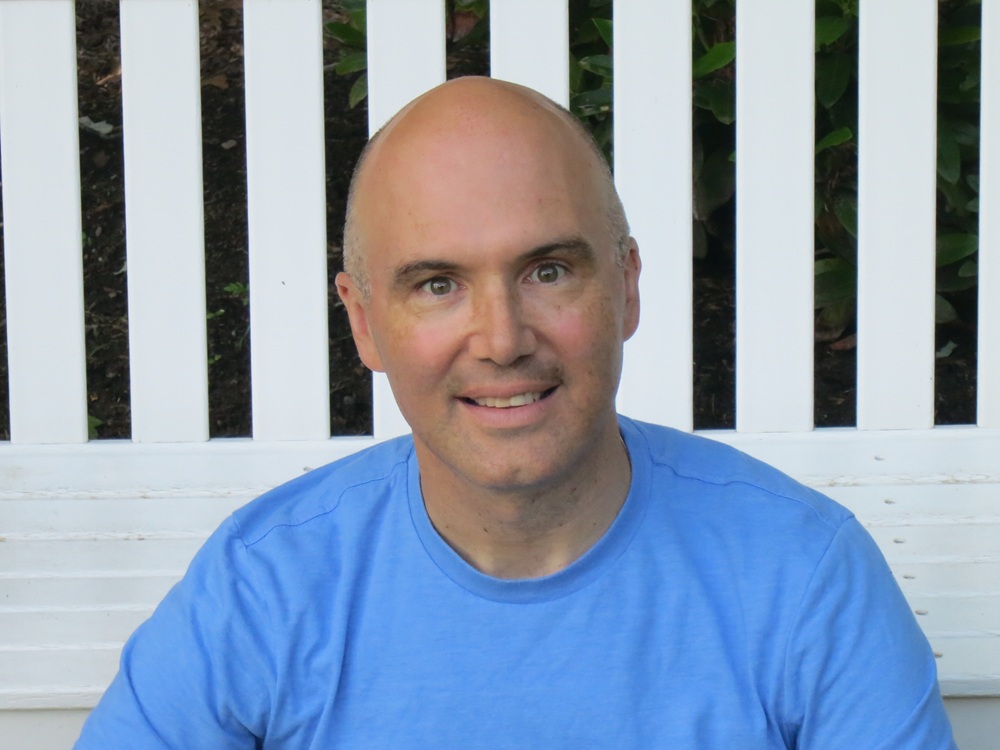
Steve Rushin net worth is estimated at between $3 million and $5 million a figure that reflects thirty-five years of work at the highest level of American print journalism, a seven-book publishing career that spans billiards guides, memoirs, novels, and baseball history, an award-winning column that ran for nearly a decade in the magazine that once defined American sports culture, and the particular financial contribution of a podcast co-hosted with one of the most recognizable names in women’s basketball. It is the net worth, in short, of a man who has been very good at a thing that most people do not fully appreciate until it is gone: writing about sports in a way that makes people feel something about more than just sports.
| Quick Facts | Details |
|---|---|
| Full Name | Steve Rushin |
| Date of Birth | September 22, 1966 |
| Age (2026) | 59 years old |
| Birthplace | Elmhurst, Illinois, USA |
| Hometown | Bloomington, Minnesota |
| Parents | Donald E. Rushin (played football for Johnny Majors, University of Tennessee, 1954); Jane Clare Rushin |
| Siblings | Third of five children; brother Jim — hockey forward, Providence (Frozen Four, 1983) |
| Grandfather | Jimmy Boyle — professional baseball player |
| High School | John F. Kennedy Senior High School, Bloomington, Minnesota |
| University | Marquette University, Milwaukee, Wisconsin (graduated 1988) |
| Honorary Degree | Doctor of Humane Letters, Marquette University (May 2007) |
| Career | Sportswriter and Senior Writer, Sports Illustrated (1988–2007; contributing writer 2010–) |
| SI Column | Air & Space (1998–2007); revived as Rushin Lit (Oct 2011–) |
| Other outlets | Golf Digest, Time, The New York Times |
| Award | National Sportswriter of the Year, 2005 (NSSA) |
| Award | Four-time finalist, National Magazine Award |
| Books | 7 published works (1990–2017) |
| Spouse | Rebecca Lobo — ESPN basketball analyst; WNBA champion (married 2003) |
| Children | Siobhan, Maeve, Thomas, Rose |
| Residence | Connecticut |
| Podcast | Ball & Chain Podcast (with Rebecca Lobo; launched October 23, 2017) |
| Net Worth (est. 2026) | $3 million – $5 million |
Steve Rushin is the 2005 National Sportswriter of the Year, a four-time National Magazine Award finalist, the author of what remains the longest single article ever published in Sports Illustrated, and the husband of Rebecca Lobo — the former University of Connecticut and WNBA star who is now one of ESPN’s most prominent college basketball analysts. The combination of those credentials, and the creative output they represent, explains both the number attached to his name and the life the number describes.
Elmhurst to Bloomington: The Making of a Sports-Obsessed Writer
Steve Rushin was born on September 22, 1966, in Elmhurst, Illinois — a suburb of Chicago — but grew up in Bloomington, Minnesota, where his family settled and where the experiences that would ultimately shape his entire career were accumulated over a Midwestern childhood shaped by sports, family, and the particular cultural richness of a city that hosted both an NFL franchise and a major league baseball team at a single shared stadium.
His father, Donald E. Rushin, was not merely a sports enthusiast. In 1954, Don Rushin was a blocking back at the University of Tennessee, playing for the legendary Johnny Majors — a connection that placed competitive athletic achievement in the family’s foundational story before Steve was born. His brother Jim carried that athletic tradition forward as a hockey forward at Providence College, playing on the team that reached the Frozen Four in 1983. Further back, his grandfather was Jimmy Boyle, a professional baseball player — giving Steve a three-generation athletic lineage that provided the raw material of sports obsession without himself becoming the athlete.
What Steve became, instead, was the observer. Growing up in Bloomington, he attended games at Metropolitan Stadium — the twin-purpose facility that hosted both the Minnesota Twins baseball and Minnesota Vikings football — not just as a fan but as a vendor, selling hot dogs and soda to the crowds. The stadium job gave him something that sitting in the stands does not: a ground-level view of the spectacle from inside it, watching how people relate to sport, what they carry into the stadium and what the experience does to them. It was, without his knowing it, the beginning of a journalistic education.
The stadium was razed in 1985, its site eventually becoming the Mall of America — the largest shopping centre in the United States. Rushin would later write about it, in the Sports Illustrated 40th anniversary issue, with an elegiac quality that only someone who had actually worked there as a teenager could produce. The lament for Metropolitan Stadium is one of the most emotionally resonant passages in his career output and a clear illustration of how thoroughly his childhood experience informed his professional voice.
He attended John F. Kennedy Senior High School in Bloomington, where his writing abilities were already evident, and graduated ready for the university that would complete his formation as a journalist.
Marquette University and the Letter That Changed Everything
Rushin enrolled at Marquette University in Milwaukee, Wisconsin — a Jesuit institution whose journalism programme is among the most respected in the Midwest, producing working journalists with both technical craft and intellectual seriousness. He graduated in 1988, and the story of how his Sports Illustrated career began is itself a study in how determination and initiative operate when they are combined with genuine talent.
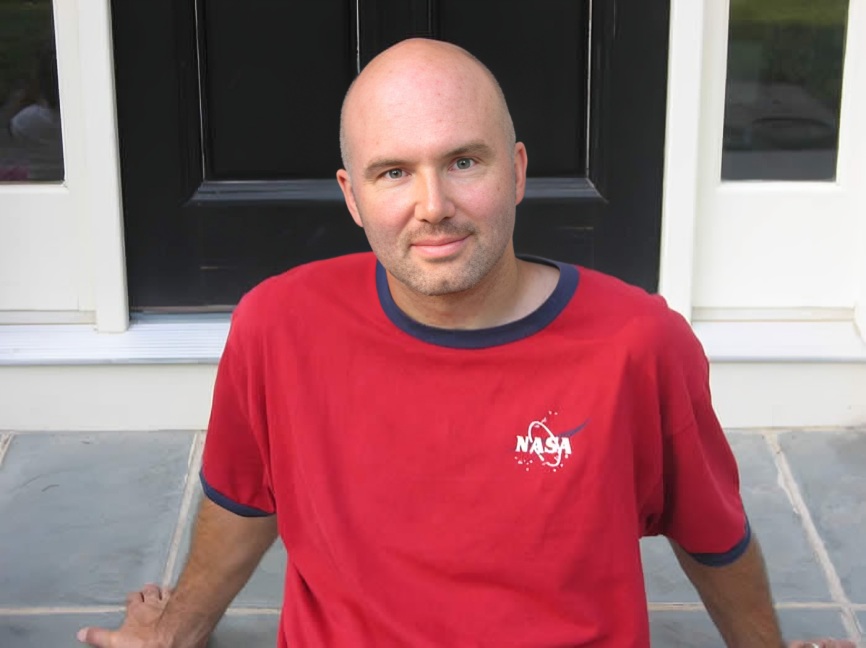
During his time at Marquette, Rushin read a story by Sports Illustrated writer Alexander Wolff covering the annual Gus Macker three-on-three basketball tournament in Michigan. The piece impressed him enough that he did something most readers do not: he wrote a letter to Wolff directly, initiating a correspondence that eventually led to a collaborative project — an anthology of sports nicknames titled From A-Train to Yogi, co-written with Wolff and Chuck Wielgus. The book gave Rushin a tangible publishing credential before he had a professional staff position, and the relationship with Wolff gave him a direct connection into the magazine that would define his career.
Two weeks after graduating from Marquette in 1988, Steve Rushin joined the staff of Sports Illustrated. He was 21 years old. Within three years — by the age of 25 — he had become the youngest Senior Writer in the magazine’s history, a milestone that speaks directly to the speed with which his talent distinguished itself from the field of gifted writers around him.
In May 2007, Rushin returned to Marquette as its Commencement Day speaker and was awarded an honorary Doctor of Humane Letters — the university’s formal acknowledgement that the career its programme had helped launch had exceeded every reasonable expectation.
Sports Illustrated: The Column, the Epic, and the Global Beat
The career Rushin built at Sports Illustrated across the 1990s and 2000s was not defined by any single category of work. It was defined by range, by a willingness to go anywhere and write about anything, and by the consistent presence of a voice so specific and so clearly his that readers could identify his work from its opening sentence.
In 1994, Sports Illustrated commissioned him to write the feature story for its 40th Anniversary issue — a project that took four months and produced five interconnected sections, each exploring a different essential aspect of sports in American life. The resulting essay, How We Got Here, ran to 24 pages and remains the longest article ever published in a single issue of Sports Illustrated in the magazine’s history. The section mourning Metropolitan Stadium — the ballpark of Rushin’s childhood, demolished nine years earlier — demonstrated that the best sports writing is not about sport at all. It is about memory, loss, community, and the way physical places carry the weight of the experiences people have inside them.
His weekly column, Air & Space, ran from 1998 to 2007 — nine years of back-page essays that occupied the prime real estate in the world’s most widely read sports magazine and that regularly transcended the sports brief to become something more closely resembling cultural commentary. The column ranged across humour, nostalgia, travel, food, language, history, and the quirky margins of athletic culture where the most interesting stories often live.
The global reporting that punctuated his SI career placed him on every continent, filing stories from Java, Greenland, and the India-Pakistan border; covering the World Series, the World Cup, and Wimbledon; eating his way around every major league ballpark in America; participating in the World Ice Golf Championship; and riding a dozen rollercoasters in a single day as the research for a feature. The breadth of the international reporting reflects a journalistic philosophy — that sport is a lens through which every significant dimension of human experience can be examined — that runs through his entire body of work.
He left Sports Illustrated in February 2007, spent time as a contributor to Golf Digest and Time magazine (for which he wrote back-page essays), and returned to SI in a contributing role in July 2010, reviving his column under the new name Rushin Lit in October 2011.
Seven Books: The Literary Career Alongside the Magazine Work
Parallel to his Sports Illustrated career, Rushin built a substantial literary output across seven published books that collectively demonstrate the same range of modes — humour, history, memoir, travel, fiction — that characterised his magazine work.
Pool Cool (1990) — his first book, a guide to billiards, written with the light touch and genuine enthusiasm that mark all his work. It was followed by Road Swing: One Fan’s Journey Into the Soul of America’s Sports (1998), a travelogue of his four-month journey across the country visiting the ballparks, arenas, and odd sporting venues that define American sports geography. The Caddie Was a Reindeer (2004) collected his journalism into a volume that demonstrated how much his magazine work had accumulated into something worthy of permanent form.
The Pint Man (2010) was his debut novel — a comic fiction set in New York, drawing on observations and character types accumulated across years of city living and sports reporting, and widely received as a successful transition from journalism into long-form fiction. The 34-Ton Bat (2013) returned to non-fiction with a baseball history organised around 375 objects — bobbleheads, cracker jacks, eye black — each one a window into a dimension of the game’s cultural history.
Sting Ray Afternoons: A Memoir (2017) is widely considered his most personal and most accomplished book — a childhood memoir set in the 1970s Bloomington, Minnesota of his youth, structured around the cultural artefacts of that era (the Sting-Ray bicycle of the title, the television shows, the music, the sports landscape) and building into something that is simultaneously a portrait of a specific American moment and a meditation on childhood, memory, and the way the past persists into the present. The memoir received uniformly positive critical reviews and brought Rushin the widest general audience of his career.
| Steve Rushin: Published Books | Year | Genre |
|---|---|---|
| Pool Cool | 1990 | Sports guide / humour |
| Road Swing | 1998 | Sports travelogue |
| The Caddie Was a Reindeer | 2004 | Collected journalism |
| The Pint Man | 2010 | Novel |
| The 34-Ton Bat | 2013 | Baseball history |
| Sting Ray Afternoons: A Memoir | 2017 | Memoir |
| From A-Train to Yogi (with Wolff & Wielgus) | Pre-career | Sports nicknames anthology |
Rebecca Lobo: The Marriage That Produced Both a Family and a Podcast
In 2003, Steve Rushin married Rebecca Lobo — the former University of Connecticut basketball star who was part of the undefeated 1994–95 UConn team, a member of the gold-medal winning 1996 US Olympic squad, and a WNBA champion with the New York Liberty, and who is now one of ESPN’s most prominent and recognisable college basketball analysts.
The couple met through a mutual connection in the sports media world — a pairing that, on paper, might seem symmetrically obvious (sportswriter meets basketball star) but that in practice reflects a genuine complementarity: Rushin’s literary intelligence alongside Lobo’s direct competitive experience and broadcasting expertise. They live in Connecticut with their four children — Siobhan, Maeve, Thomas, and Rose — a household whose collective sports knowledge is almost certainly exceptional.
The marriage produced a creative partnership alongside the personal one. On October 23, 2017, Rushin and Lobo launched the Ball & Chain Podcast — a weekly programme in which they discuss current events, sports, family life, and whatever else seems worth examining. The podcast format suits both of them: Lobo’s broadcasting confidence and Rushin’s comedy-inflected analytical intelligence make for a combination that listeners respond to as warm, honest, and entertaining. The podcast adds a meaningful supplementary income stream to Rushin’s overall financial picture while extending both their individual brands into a shared one.
Steve Rushin Net Worth: The Full Breakdown
The most accurate assessment of Steve Rushin net worth draws on the consistent evidence of his career earnings across multiple income streams:
| Income / Asset Source | Estimated Value |
|---|---|
| Sports Illustrated salary (1988–2007; contributing 2010–) | Major cumulative earnings over 30+ years |
| Golf Digest and Time contributions (2007–2010) | Supplementary income during SI hiatus |
| New York Times essays (ongoing) | Per-piece fees; prestigious platform |
| Seven published books (advances + royalties) | $500,000–$1.5M cumulative (est.) |
| Sting Ray Afternoons memoir (2017) | Strongest single book commercial performance |
| Speaking engagements (Marquette commencement; journalism events) | $10,000–$30,000 per major appearance |
| Ball & Chain Podcast (with Rebecca Lobo, 2017–) | Growing revenue; sponsorships and ad deals |
| Connecticut real estate | Asset contributor |
| Estimated Total Net Worth (2026) | $3 million – $5 million |
The figure is consistent across both reference documents provided and with the general picture of what a career of Rushin’s calibre, duration, and diversity of output produces in the American literary journalism market. It is not the net worth of a television star or a celebrity athlete. It is the net worth of a writer — one of the very best American writers in his specific field, over a very long time — and it reflects both the genuine financial rewards that sustained excellence in prestigious journalism produces and the compound effect of diversification across books, podcast, and speaking work.
One important contextual note: his wife Rebecca Lobo’s estimated net worth of approximately $5 million, accumulated through her WNBA career, ESPN salary, and endorsement work, means the household’s combined financial position is substantially stronger than either figure taken alone. The family lives in Connecticut in what is, by any measure, a position of genuine financial security.
The Award, the Column, and Why They Matter
Rushin’s 2005 National Sportswriter of the Year award — given by the National Sportscasters and Sportswriters Association — came at the height of his Air & Space column era and recognised a body of work that had, over nearly two decades, consistently demonstrated that sports journalism could be as literary, as culturally intelligent, and as emotionally resonant as any other form of American writing.
His four National Magazine Award nominations — journalism’s equivalent of the Pulitzer for magazine work — placed him in the company of the most serious practitioners of non-fiction writing in the country. The nominations recognised not just individual pieces but an approach to journalism that treated the reader as a person capable of appreciating language, complexity, and genuine feeling rather than someone to be informed and moved on.
The New York Times described him as the “ultimate tinkerer with language” — a phrase that captures both the precision and the playfulness that characterise his best work. He writes sentences that sound like they were easy to write, which is the surest sign that they were extremely difficult.
Conclusion
Steve Rushin net worth of approximately $3 million to $5 million is the financial expression of a career that has been, from its first week at Sports Illustrated in 1988 to the most recent episode of the Ball & Chain Podcast, defined by a single consistent quality: the refusal to write about sports as though they were merely sports. Born in Elmhurst, raised in Bloomington, educated at Marquette, trained at the world’s most celebrated sports magazine, decorated with the industry’s highest honour, married to one of women’s basketball’s most significant figures, and settled in Connecticut with four children and a podcast that combines their complementary voices — Steve Rushin is what a genuine writing career looks like when it is built on actual talent, sustained by actual work, and directed by actual values across the full arc of a professional life.
